
The wooden shepherd’s horn, called a “ligawka,” is about 1.2 meters long and is played during the Advent season in the provinces of Podlasie and Masovia in eastern Poland.
Continue readingLigawka—the Polish shepherd’s horn

The wooden shepherd’s horn, called a “ligawka,” is about 1.2 meters long and is played during the Advent season in the provinces of Podlasie and Masovia in eastern Poland.
Continue reading
If interpretation is the act of appropriating a piece of music, a work born from the soul of a composer, it’s the interpreter’s job to grasp the very essence of the message that the creator of the work is trying to convey. Stick to the information noted by the composer on the score, the unspoken words that everyone should know, and technical mastery.
Continue reading
What happens when an alpine instrument meets modern mindfulness practice? This article explores the alphorn as a meditative tool — tracing the path from breath awareness to physical vibration, bringing ease and intention to performance, with practical techniques any player can try.
Continue reading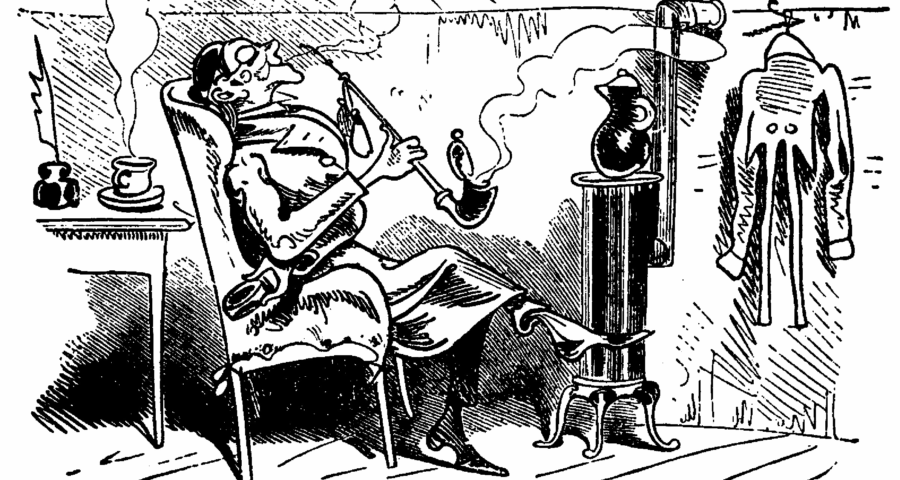
Anyone who often works with groups and the alphorn knows that a lot happens! The alphorn lets us breathe together, we listen to each other improvising, perceive common vibes, communicate sensitively and non-verbally. Can these experiences sustainably improve the quality of relationships in the group? As part of an action research project, Thomas Heel explored the question of how the alphorn can be used as an inclusive music education vehicle. He processed his experiences with a class at the vocational
Continue reading
Playing the alphorn is fun and beautiful! That’s why it’s good to play a musical instrument. When it’s just for fun, as a hobby, financial questions remain personal and directly linked to the budget you can devote to the hobby. For me, the situation, or rather the reality, is quite different: I’m a professional freelance musician and I have to make a living from my work.
Continue reading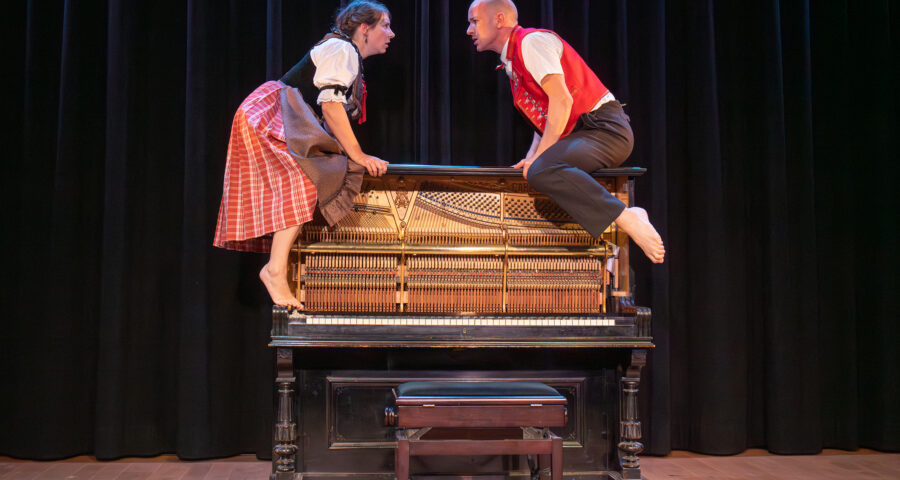
What constitutes tradition in music? Lea Hagmann has not only dealt with this question as an ethnomusicologist at the University of Bern, but has also created the movie “Beyond Tradition” together with Rahel von Gunten. It is currently showing in cinemas in Switzerland.
Continue reading
Alphorn playing is sometimes described in history as “blown yodeling”, as “yodeling on the instrument”, or as “yodeling on the alphorn”. What is meant by this? On the occasion of the publication the English translation of the book “Alpenstimmung” (“Alpine Vibes”), Yannick Wey and Andrea Kammermann comment on this question.
Continue reading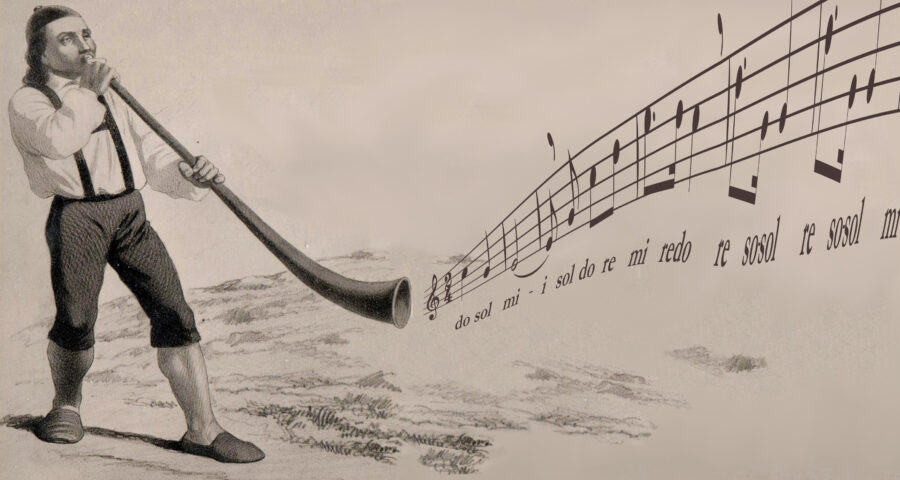
The alphorn presents such a unique, timeless beauty in its natural production of the overtone series; a sound that captivates with its resonance and simplicity. However, the absence of any kind of keys or valves means that they player is entirely responsible for vividly hearing the correct pitch before playing it. Unlike a piano or a fretted guitar string, the alphorn will never inform the player what the correct pitch is. For this reason, it requires a very clear musical
Continue reading
Since 1975 the ISO standard 16-1975 is valid (here you can buy it for 40 CHF). It sets the concert pitch a1 at a frequency of 440Hz. As early as 1939, this tuning was agreed upon at a conference in London and endorsed as a recommendation by the ISO in 1955. With its adoption as a standard, unification was sealed, promoting musical exchange, trade of musical instruments and audio equipment. Already in the 1980s some people rejected the standard and
Continue reading